In 1975, all the advertising inducing me to spend was pointless unless I could afford to buy. I knew that I mattered only to the extent that I consumed. “I buy, therefore I mean something in the USA” is how I felt.
Too young for a regular paying job, I did receive birthday checks from my grandparents. And with what I earned from cleaning the church on Saturdays, I had cash to spend. So I did what AM radio and Creem magazine, and a large lack of confidence impelled me to do: I went out and bought a record album.
With a fourteen-year-old’s certainty, I knew that the only British rock star worth being a fan of was Elton John. His wonderfully funky, hook-laden music, with melodic, sing-along choruses in Bernie Taupin’s melancholy, wistful, decadent words took me to romantic places like Spain, the wild west, and urban rooftops. I enjoyed inhabiting those musical worlds.
I was not a puritan, though. I did enjoy songs by Gary Glitter, T. Rex,and Alice Cooper, all of them uncomfortably androgynous. I might buy one of their 45s ($1.49). But when it came to an LP ($7), in my mind, only Elton in his flamboyant outfits and platform shoes, merited my precious entertainment dollars. I certainly wouldn’t be caught owning an LP by the obviously homosexual David Bowie,
On this spring day, I hold my recently-purchased copy of Elton’s Catptain Fantastic and the Brown Dirt Cowboy record, telling my friend Paul how good this “concept album” is. Then his cousin, a stranger from St. Bernadine’s parish, shows up, at our meeting ground, the tennis courts at the end of the block.
When he sees the LP I hold, his mouth curls into amused disgust.
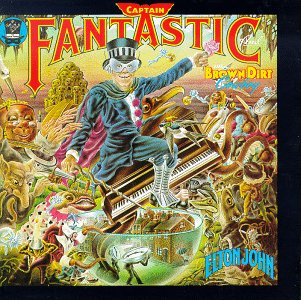
He looks at me, his eyes narrowing. “Elton John? How could you stand his music? That guy is so-o gay!” He then nods toward me and derisively asks. “Paul, is this guy a faggot?” I feel myself redden, my core standing in the neighborhood threatened.
A word or two about my homophobic youth: fear of queerness is in the air, an unquestioned premise of a young man’s status. Of course, homosexuality is wrong, disgusting, unnatural. And, look around. Real men love women, and sports, and John Wayne movies, and Old Style beer. They nod their crew-cuts at ads of shiny shirted men luring women into their grasp with the right musk or Hai Karate cologne. Any deviation from the hetero-norm is unthinkable.
In the whole neighborhood, there is but one male I know brave enough to be his gay self, and he is an object of universal contempt. When South Oak Park’s David Bowie passes us on the school playground, my friends smile and shake their heads in judgment. “Would you get a look at that fag? He’s wearing his mom’s makeup!”
A strong urge to justify myself sweeps through me. “I’m not gay!” I say, defensively, “…and there’s some good music on here. Um, also,” I add, grasping, “look at the cover art. It’s pretty… far out…”
At my inadequate repartee, the young man shakes his head, smirking. More than challenging my budding manhood, the stranger from St. Bernadine’s challenges my critical standards. He calls my aesthetic into question. Mine. I am astonished. This has never happened. I breathe in deeply, trying to find a retort.
But to my rival’s claim of Elton’s perversion, I have no reply. For although the former Reginald Dwight hasn’t “come out” yet, how else to explain his outrageous feathers, beaded costumes, and bejeweled, feminine glass frames?
Here on the tennis court, my critical rival has come not merely to besmirch my masculinity and disparage my tastes, but to proclaim his true faith in the only musical artist worth any American teen’s wealth in 1975.
And who is that? Why, Pete Townshend and the Who, specifically their greatest-of-all-time concept album, last year’s Quadrophenia.
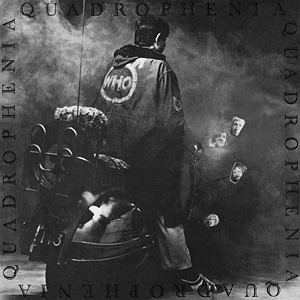
I am mute, impressed as my rival waxes eloquent describing the stunning achievement of this double album. “These songs, they tell a teenager’s life, they’re real, intense, and they rock so hard that you want to listen to them again and again, I’m telling you. There is no one, not John Bonham, not Ginger Baker, no one who plays drums like Keith Moon!”
In addition to perhaps deepening my homophobia for a while, my rival’s besting of me this day dislodges my musical bearings from pre-teen (what was called “teenybopper”) to more mature (“teenager”) tastes. I start to question my tastes.
In five years’ time, I, too, will inhabit the world of Jimmy in Quadrophenia. As a 19 year old, I saw myself in him, a young man struggling against corrupt authority that threatened to quash his emerging manhood. Like my rival, I ended up listening again and again to Quadrophenia’s songs of alienation, loneliness, and striving for love against desperate odds. The music hadn’t changed, but I had.
And ironically enough, my homophobic rival who contrasted Elton’s gayness with the strict heteronormativity of the Who would, it turns out, have to eat crow, as Pete Townshend has revealed what he carefully concealed in 1975: his bi-sexuality.
 The Wikiness
Leave a comment