Ten-year-old me was entirely captured by American pop culture–movies, sports, TV, and AM radio. Possessing entertainment knowledge gave status, I knew, and a comforting sense of being part of something larger.
“Yes,” I could say, “my family life might be shameful, but I know who bats third for the Cubs (Joe Pepitone) and who guested on the Flip Wilson Show last week (Bill Cosby, Gina Lollabrigita, and John Sebastian).”
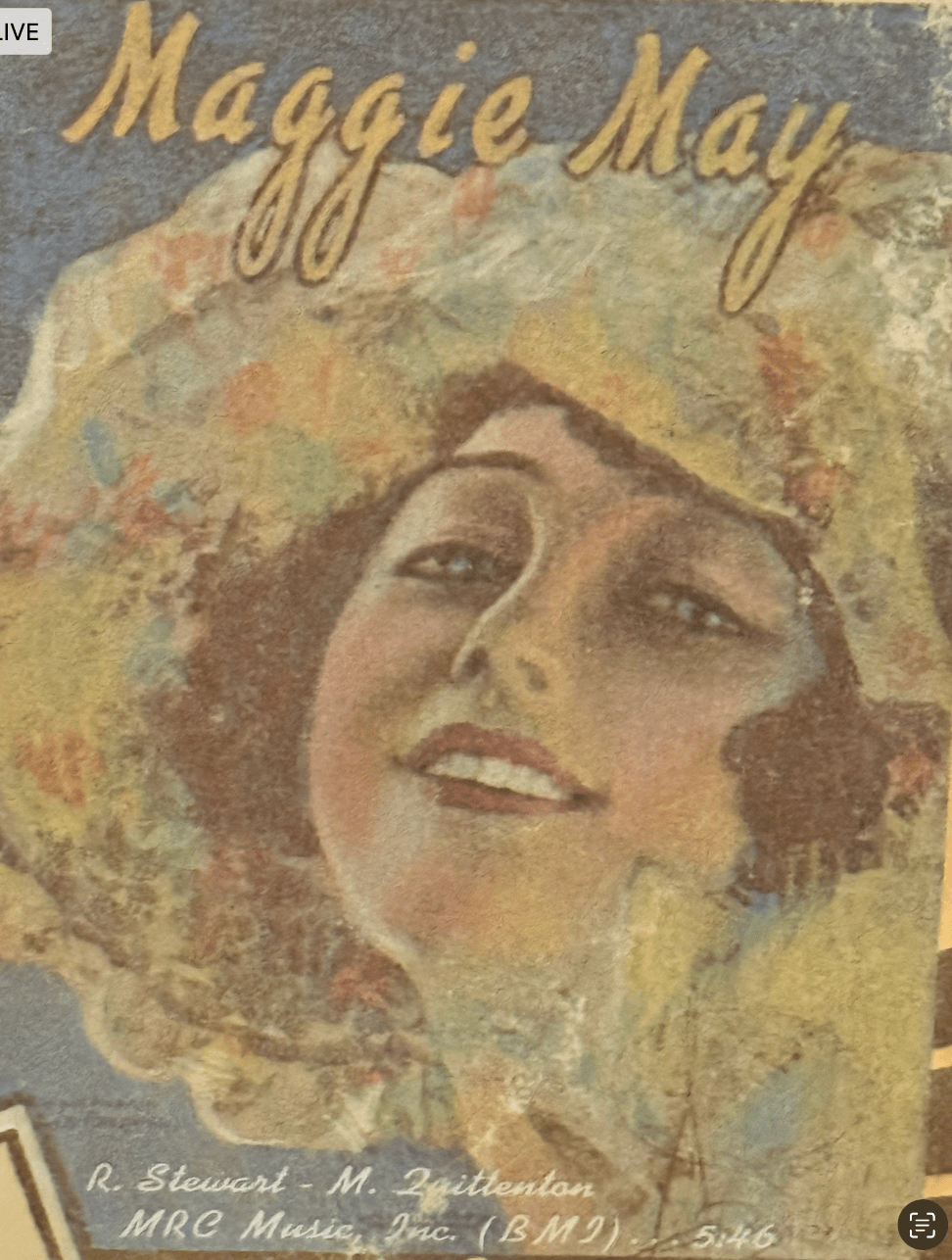
My mind was ready when Rod Stewart’s 1971 “Maggie May” (from his LP Every Picture Tells a Story)” spent five weeks at number one. That was an eternity for a young person like me. Forever after, I’ve felt attached to the song.
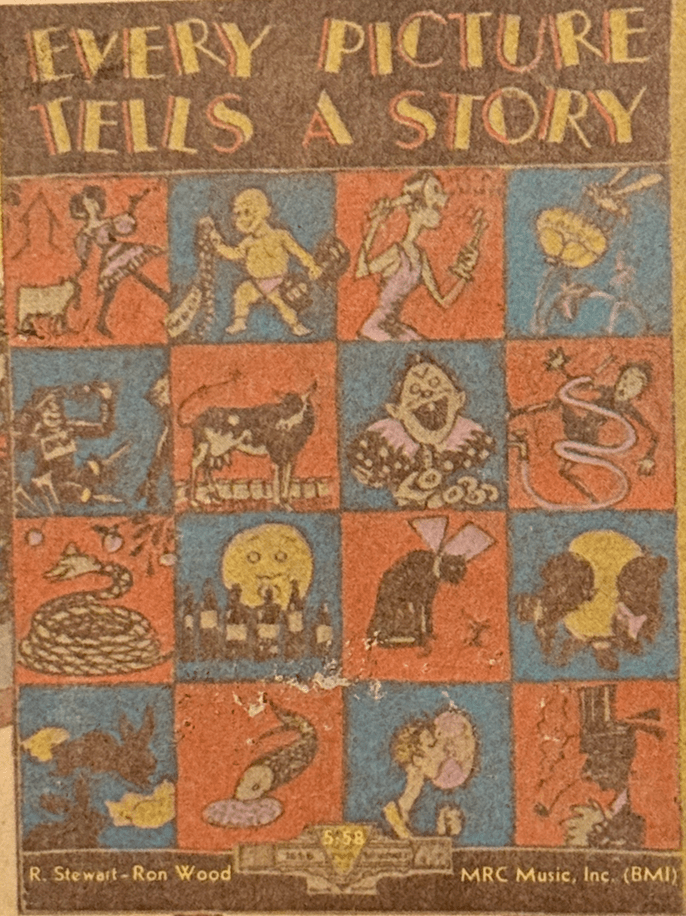
Stewart’s song tells the story of a young man with conflicted feelings toward an older woman who has sexually exploited him, quite an atypical theme, given my favorite music till then. What was “my type”? Well, if a top 40 tune featured heartbreak, loneliness, or alienation, it was probably on my playlist.
A sampling:
- Neil Diamond’s “I Am, I Said,” and “Song Sung Blue”
- Cat Steven’s “Father and Son” (I identified with the son)
- The Beatles’ “She’s Leaving Home” (I identified with the daughter)
- The Carpenters; “Rainy Days and Mondays”
- The Bee Gees’ “How Can You Mend A Broken Heart”
- Smokey Robinson’s “Tears of a Clown” and
- Gilbert O’ Sullivan’s “Alone Again, Naturally”
By contrast, the exuberant introductory strains of Maggie May grabbed my ears: a jangly mandolin harmonizing with acoustic guitar. It was unlike, but also similar to the folk-rock sound proliferating in 1971. Those traditional folk instruments “stole my heart,” to quote a line from the song,
Fifteen seconds of the strings, and then two stark drumbeats. “Bam-bam.” The song takes off.
“Wake up, Maggie, I think I got something to say to you.” The singer’s voice is raspy, British, and uncertain, and altogether compelling. Will his resolve to speak to this older woman hold? Can he tell her how he truly feels and retain their relation along with his sense of self-worth?
The song flows on in a mighty stream of consciousness like a mentally rehearsed conversation. The lyrics ignore the verse-verse-chorus rules. There is no chorus, but plenty of ambivalence, the kind a child feels looking at his failing parents. “You led me away from home/’Cause you didn’t want to be alone,” he accuses her. And then immediately, “You stole my heart, I couldn’t leave you if I tried.”
Against the struggle conveyed by the words, the song’s chord progression is major, its beat jaunty. That tension between idea and mood allures me in music to this day. “Maggie May” was perhaps a gateway for me to that quality of song.
Finally, I identified with the persona’s confidence. One day, I would be a man like him, with choices: “I suppose I could collect my books and get on back to school,” he ponders, “Or steal my daddy’s cue and make a living out of playing pool. Or” he supposes he could “find myself a rock and roll band/That needs a helpin’ hand.”
What will his resolution be? The song never tells you. Its outro, an acoustic march, fades away slowly. In fact, it echoes to today.
 The Wikiness
Leave a comment