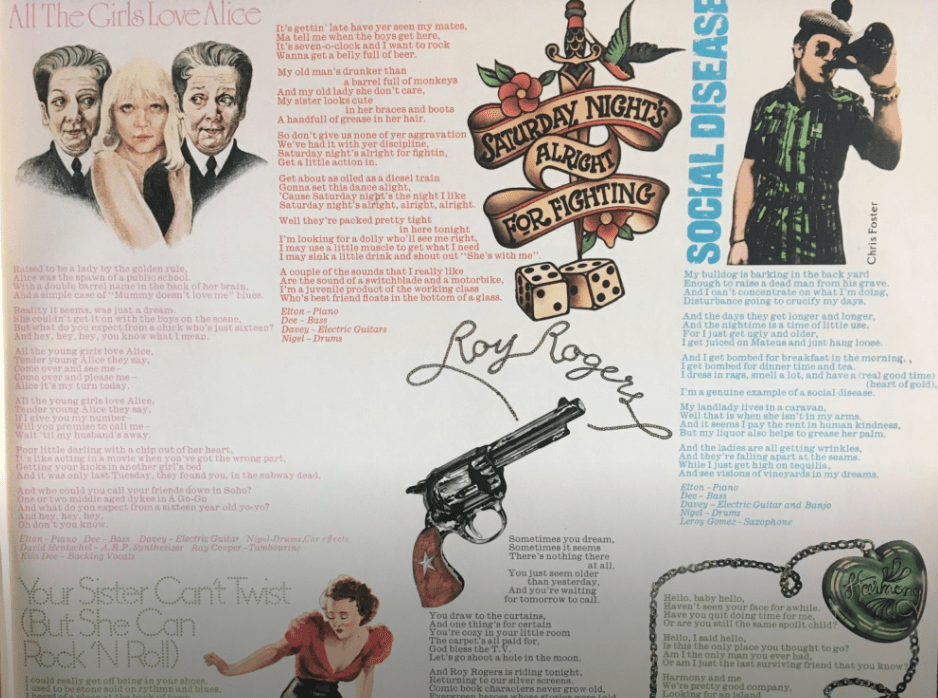
Drop the needle on any track of my hundreds of vinyl music LPs, and I’ll tell you a story. My memories come enmeshed in music. Songs take me back, perhaps to the time I first heard them, or maybe another moment when they figured prominently and emotionally as soundtrack for my life’s dramas and comedies.
For instance, I cannot hear Keith Jarrett’s version of “It Never Entered My Mind” (1983), a Rogers and Hart song, without immediately going back to that dark apartment on Touhy Avenue where I pined for a lost love three thousand miles away. The song both assuaged and aggravated my heartache. Safely alone, I’d cry as Jarrett’s piano articulated the sad, lonely surprise of the lyric: “Once you told me I was mistaken/That I’d awaken with the sun/and order orange juice for one./It never entered my mind.”
And every track on Dylan’s Blonde on Blonde double LP brings me back to 505 ½ E. Olive Street from 1982-85, when the album’s bluesy melodies and stream-of-consciousness lyrics harmonized perfectly with my graduate student lifestyle, which included plenty of “Visions of Johanna,” “Texas medicine,” and far too many cigarettes and cups of coffee. Music on the stereo was a constant companion as I read and wrote. To this day, lines like, “To live outside the law, you must be honest” reverberate in present circumstances, as pertinent and reassuring as ever.
Going back to explore the roots of my toxic masculinity, I arrive at the crucial transition from prepubescence to adolescence. These years in my life parallel exactly Elton John’s emergence on the American Top 40 and his (and lyricist Bernie Taupin’s) ascent to being the biggest rock act of the early 70s.
When I was nine in 1970, I was charmed by their tender “Your Song,” which I heard on WLS and WCFL. I loved it so much that I got my sister Sheila to teach me how to play it on piano. “Your Song”’s unpretentious lyrics and Elton’s melodic and harmonic genius made me a devoted fan.
I saved my allowances to buy all of Elton’s records, from 1970’s Tumbleweed Connection to 1973’s Goodbye Yellow Brick Road. And in that time Taupin’s protagonists grew dark with a growing awareness of corruption and human depravity–strong stuff for 12-year-old me. There were “sweet painted ladies,” abused lesbian teenagers, former soldiers down on their luck, and everywhere, the companionship and comfort of alcohol. I learned that it was a good pain reliever and vivifying antidote to suicidal thoughts, and that a “couple of vodka and tonics” could “get you on your feet again.” I also learned that parties began when one got “about as oiled as a diesel train” and with a “belly full of beer” violently claimed possession of a woman.
A credulous 13-year-old with increasing levels of testosterone pumping in his veins, I felt trusted with risqué knowledge by Taupin’s lyrics, brought into adult spaces. The songs felt like messages from a worldly older brother I never had. I thought they gave me inside knowledge into how women and men got along, and how life worked in the real world.

How right, and wrong, I was!
 The Wikiness
Leave a comment